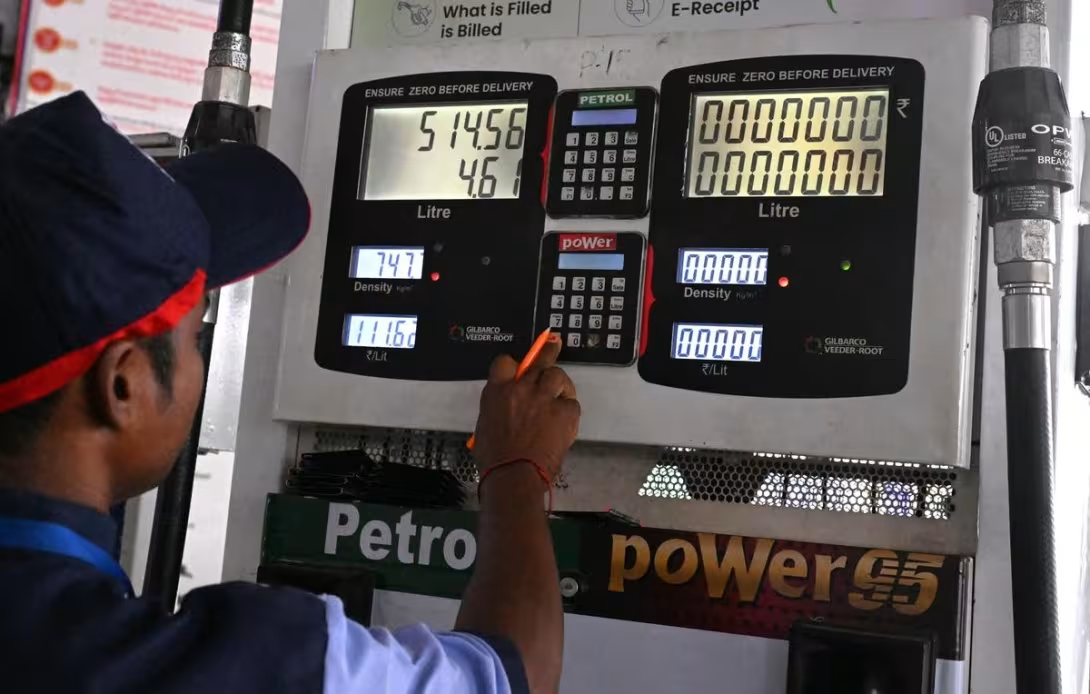
India's government has introduced temporary restrictions on the sale of petrol and diesel through retail fuel stations in response to an unusual surge in demand from industrial and commercial consumers. The move comes amid rising energy costs linked to geopolitical tensions in West Asia, which have widened the price gap between bulk and retail fuel channels. The new measures aim to prevent market distortions, ensure adequate fuel availability for regular consumers, and discourage resale activities. Industry observers believe the decision reflects growing concerns over supply management as global energy markets remain volatile and domestic fuel consumption patterns undergo significant shifts.
Government Acts to Address Unusual Fuel Demand Patterns
In a decisive intervention aimed at stabilizing the fuel distribution system, the government has imposed temporary restrictions on the purchase of petrol and diesel from retail fuel outlets by industrial and commercial consumers.
The order, which came into effect late Thursday, requires businesses that consume large volumes of fuel to procure their requirements exclusively through designated bulk supply channels rather than purchasing from retail pumps. The directive will remain in force for 90 days unless withdrawn earlier by authorities.
Officials indicated that the measure was necessary after monitoring a sharp and unexpected increase in fuel purchases at retail outlets across several regions.
Diesel Purchase Cap Introduced
As part of the new framework, retail fuel stations have also been instructed not to dispense more than 200 litres of diesel per day to a single consumer or vehicle.
Authorities emphasized that fuel purchased under these conditions cannot be resold, signaling a broader effort to prevent speculative buying and unauthorized redistribution.
The restrictions are designed to ensure that retail fuel outlets continue serving their primary purpose of meeting the needs of individual consumers and small-scale users rather than functioning as alternative supply channels for large commercial operations.
Rising Global Energy Costs Trigger Market Distortions
The government's intervention follows growing concerns over pricing distortions caused by recent developments in global energy markets.
Escalating tensions in West Asia have contributed to higher crude oil and refined fuel costs, increasing pressure on industrial users that traditionally purchase fuel through bulk procurement agreements. As price differences between bulk and retail channels widened, many commercial consumers reportedly shifted their purchases to retail fuel stations in an attempt to reduce operating expenses.
This migration altered normal demand patterns and placed additional pressure on retail distribution networks.
Significant Shift from Bulk to Retail Channels
Market data reviewed by policymakers indicated a substantial decline in bulk fuel sales in recent weeks.
By late May, authorities had observed a nearly 29% drop in bulk fuel purchases, with a corresponding increase in volumes sold through retail outlets. The trend raised concerns about the long-term sustainability of fuel distribution mechanisms and the possibility of shortages if commercial demand continued flowing into retail networks.
Industry analysts note that bulk fuel supply systems are specifically designed to cater to large industrial users, transportation fleets and commercial enterprises, while retail pumps primarily serve individual motorists and small businesses.
Protecting Supply Stability and Consumer Access
The government's latest directive underscores its commitment to maintaining balanced fuel availability during a period of heightened global uncertainty.
Energy market experts believe the restrictions are intended not only to preserve inventory levels at retail stations but also to improve transparency in fuel consumption and distribution. By redirecting commercial demand back to dedicated supply channels, authorities hope to reduce pressure on retail infrastructure and ensure uninterrupted access for ordinary consumers.
The move also reflects a broader strategy of managing energy resources more efficiently as geopolitical risks continue to influence international fuel markets.
Outlook for the Fuel Sector
While the restrictions are temporary, their impact will be closely watched by fuel retailers, industrial consumers and policymakers alike. If global energy prices remain elevated, businesses may face higher procurement costs through bulk channels, potentially affecting operating expenses across multiple sectors.
However, from a policy perspective, the decision is viewed as a preventive measure aimed at preserving market discipline and preventing supply disruptions during a period of heightened volatility.
As energy markets navigate ongoing geopolitical uncertainty, the government's latest action highlights the delicate balance between ensuring fuel affordability, maintaining supply security and safeguarding the integrity of the country's distribution network.
Comments